 Provo
Mice Control in Provo, UT
Scratching in the walls at night? Droppings along the baseboards? Provo Rodent Pros removes the mice and seals the way they got in — so the problem ends instead of repeating every fall.
Call (385) 406-1774Free EstimateFree estimate on the call — no obligation.
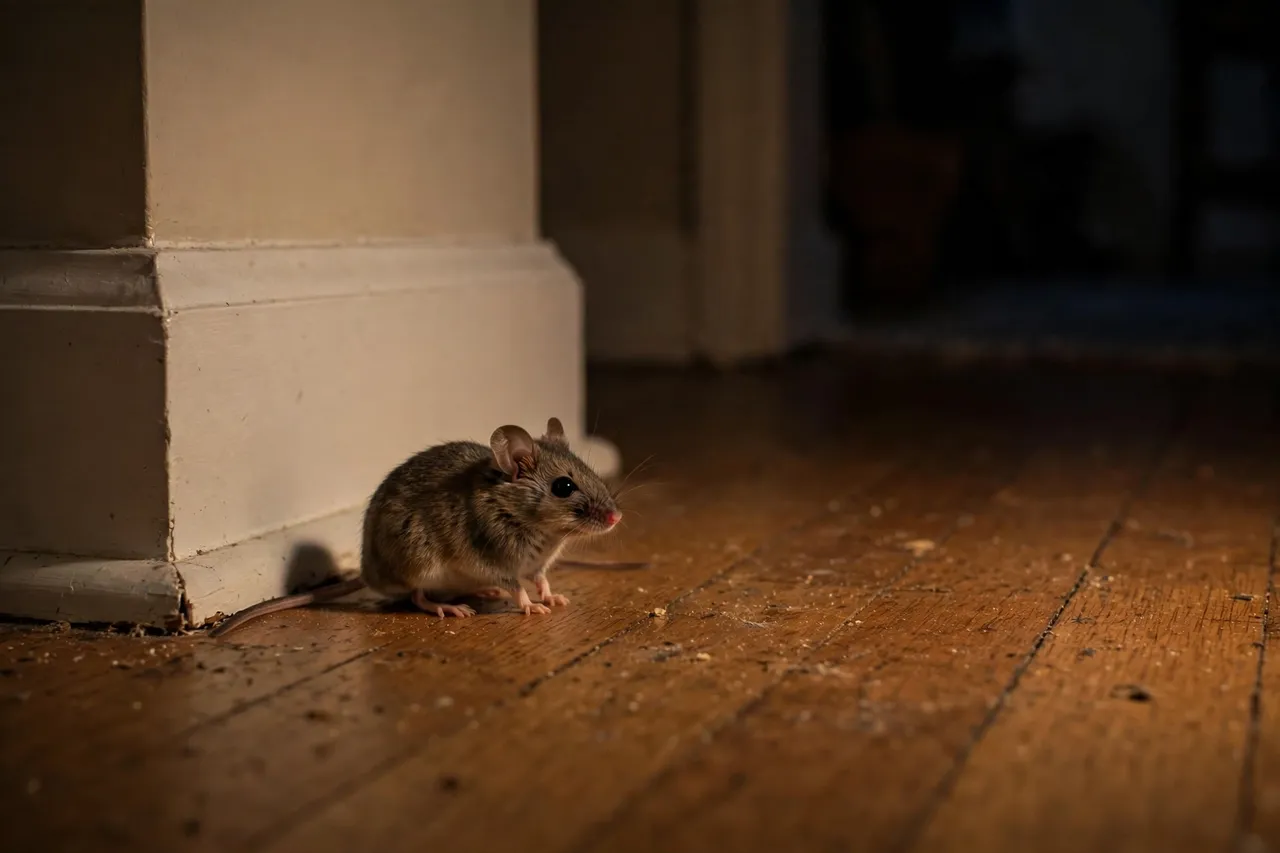
Most mouse problems in Provo come down to two animals, and knowing which one you have changes how the job should be done.
Deer Mice and House Mice in Utah County
Deer mice live mainly in fields and vegetated areas around buildings. When temperatures drop, they can move indoors in search of food and shelter. Utah State University Extension describes deer mice as occasional invaders of buildings. They can also carry hantavirus, so droppings and nesting material need careful handling. We identify the rodent before choosing a removal or cleanup plan.
Source: Utah State University Extension
The deer mouse has oversized ears and eyes, a brown back with a clean white belly, and it lives outdoors most of the year — in the foothills above Edgemont and Rock Canyon, in fields and rock walls along the bench, in woodpiles and sheds. When the first cold nights come off the Wasatch in September, deer mice start testing houses for warmth, and a surprising number find their way in.
The house mouse is different. Smaller, plain gray-brown, with a nearly hairless tail, it lives close to people all year. House mice nest within a few feet of their food source — behind the stove, under the sink, in the back of the pantry, in a cluttered garage. They breed fast enough that a pair in spring can become a real infestation by the holidays if nothing interrupts them.
Both species squeeze through gaps you would swear are too small. A mouse needs an opening about the width of a pencil. In Provo's older housing stock near downtown and BYU, those openings are everywhere: shrunken weatherstripping at garage door corners, gaps around gas and water lines, unscreened vents, and rooflines where two planes meet and the original flashing has pulled away. Our mice control service finds the mice, removes them, and — this is the part that actually solves the problem — closes every one of those doors behind them.
Mice Control Services
Deer Mouse Control
The foothills species that moves into bench homes every fall — and the one whose droppings need careful, safe handling.
Deer Mouse Control →House Mouse Control
Year-round indoor mice around kitchens, pantries, and garages, removed with trapping and sealed entry points.
House Mouse Control →Mice in the Attic
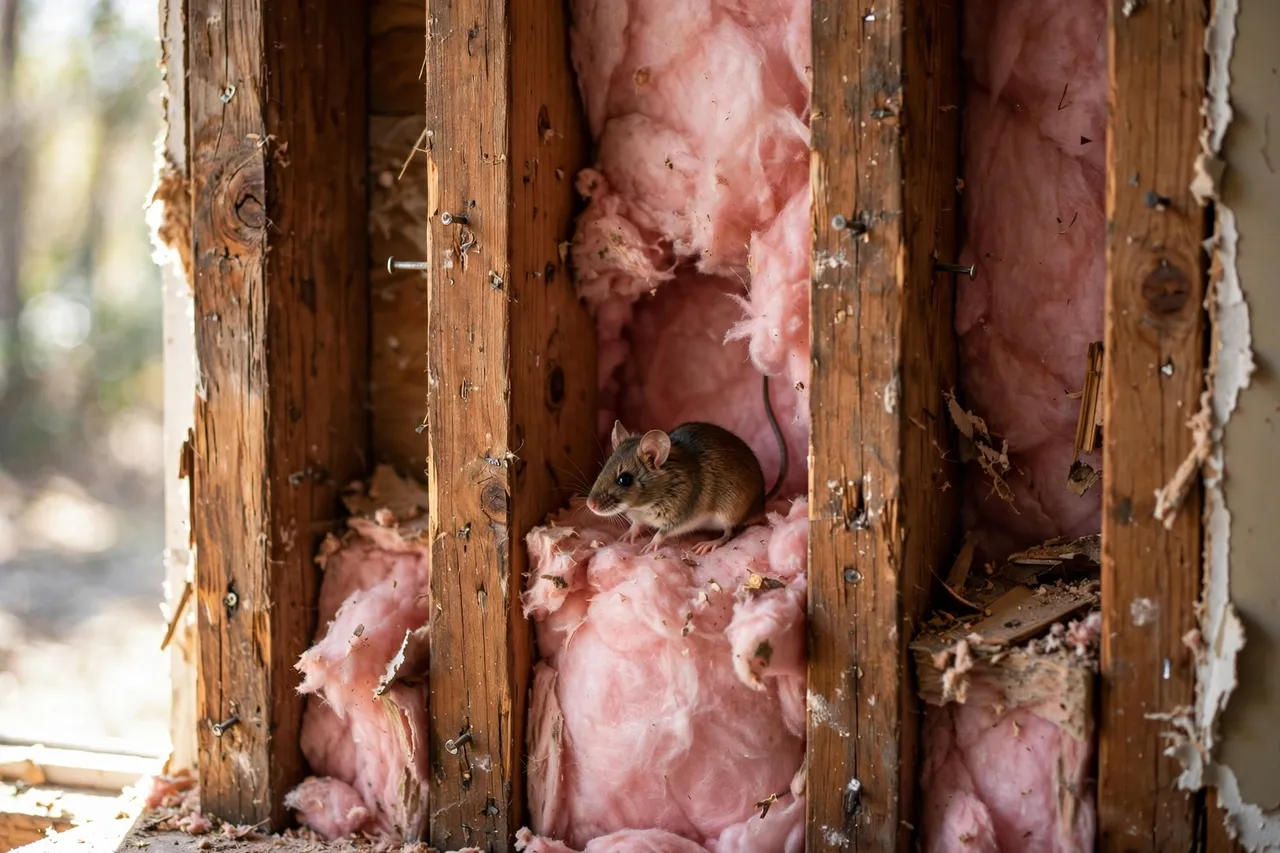
Nesting in insulation, chewing up there at 2 a.m. We clear the attic and deal with contaminated material safely.
Mice in the Attic →Mice in Walls
Scratching and scurrying inside wall voids. We locate the activity, remove the mice, and close the routes they travel.
Mice in Walls →Mice in Kitchen & Pantry
Mice where your food lives is a health problem, not just a nuisance. Fast removal plus food-storage fixes that hold.
Mice in Kitchen & Pantry →Mouse Removal
Humane, confirmed removal by trapping — and why poison usually creates a worse problem than the one you started with.
Mouse Removal →How Mice Control Works
1. Inspection first. We start by identifying the species and mapping the activity: where droppings are fresh, where rub marks show travel routes, where nests are forming. Outside, we walk the foundation, garage, vents, and roofline to find every entry point — because sealing guesses doesn't work.
2. Removal. We set traps along the actual travel routes, in the attic, wall-adjacent spaces, and kitchen areas where mice are active. Trapping lets us confirm mice are being caught and lets you see the problem is actually shrinking.
3. Exclusion. Every gap we found gets sealed with materials mice cannot gnaw through — metal flashing, copper mesh, hardware cloth, and proper sealants. This is the step most DIY efforts skip, and it is the step that decides whether you call us again next fall.
4. Cleanup and prevention. Where droppings or nesting have contaminated an area, we clean it using safe wet methods — never dry sweeping. Then we walk you through the attractant fixes: sealed food storage, pet food off the floor, clutter away from the foundation.
Why Provo Homes Get Mice
Provo sits in a bowl between Utah Lake and the Wasatch front, and that geography drives the mouse calendar. All summer, deer mice thrive in the foothill scrub above the bench neighborhoods — Edgemont, Rock Canyon, Indian Hills, the Oak Hills area. The first cold snap in September or October pushes them downhill toward warm structures, and bench homes back right up to their habitat. Homes there can go from zero mice to scratching in the attic in a single week of cold weather.
In the older neighborhoods — Maeser, Joaquin, Franklin, the blocks around downtown and BYU — the pressure is different. These homes have had decades to settle. Foundations crack a little, siding gaps open at corners, old vent screens rust through, and garage doors stop sealing tight along the bottom. Each gap is small; added together, an older Provo home can have a dozen mouse doors standing open. Student rentals add another factor: high turnover, food stored in bedrooms, and nobody assigned to notice the first signs.
Newer homes on the west side are not immune either. Construction in former fields displaces field mice and voles, and a brand-new subdivision can have mouse pressure its first two winters until the surrounding lots are built out and landscaped.
Honest Advice Before You Book Mice Control in
A single mouse sighting in October does not always mean an infestation — sometimes one deer mouse wanders in through an open garage door and can be trapped in a night or two. Start with a snap trap along the wall where you saw it, baited and placed perpendicular to the baseboard. But be honest with yourself about the signs: droppings in more than one room, scratching sounds on multiple nights, or a nest in the insulation means the mice have moved in, not visited. Mice breed faster than most people expect, and every week of waiting makes the removal longer and the cleanup bigger. If the droppings are in an attic or anywhere you would have to disturb them, do not sweep them up dry — call us and let that be handled safely. And whatever you do, skip the poison. It is the one shortcut that reliably makes a mouse problem smell worse, last longer, and put your pets at risk.
Mice Exterminator in Provo, UT
When someone in Provo searches for a mice exterminator, they usually mean one thing: the scratching has gone on long enough, and they want a specialist who will end it rather than sell them a spray. That is what a mice exterminator does here — and it is different from general pest control. A general company treats dozens of pests, mostly insects, and usually handles mice with bait stations. A mice exterminator focuses only on mice: species identification first, then trapping and removal, then exclusion — sealing the entry points — so the problem ends instead of repeating every fall.
The identification step is the one that decides everything else. Provo's two mice behave differently. The deer mouse lives outdoors most of the year in the foothills above Edgemont and Rock Canyon, in fields and rock walls along the bench, in woodpiles and sheds, and moves indoors with the first cold nights. The house mouse lives close to people all year — behind the stove, under the sink, in the back of the pantry, in a cluttered garage — and breeds fast enough that a pair in spring can become a real infestation by the holidays. Both squeeze through a gap the width of a pencil, and both need the same closing step: every hole or opening larger than 1/4 inch sealed with concrete mortar, sheet metal, or heavy-gauge hardware cloth, as Utah State University Extension advises.
What a mice exterminator should do on the visit, in order, is inspect, remove, seal, and clean up. The inspection maps the activity — where droppings are fresh, where rub marks show travel routes, where nests are forming — and walks the foundation, garage, vents, and roofline outside to find every entry point. Removal is done by trapping along the actual travel routes, close to walls: USU Extension recommends at least 6 traps, with small amounts of fresh bait, and notes that peanut butter or chocolate work well while cheese is not recommended. Trapping lets us confirm mice are being caught, so you can see the problem shrinking. Sealing follows with materials mice cannot chew through — metal flashing, copper mesh, hardware cloth, and proper sealants. Cleanup uses safe wet methods, never dry sweeping, because deer mice carry hantavirus and the risk comes from breathing dust stirred up from droppings and nesting material.
Two honest warnings belong on any mice exterminator page. First, USU advises against using rodenticides or poisons inside homes, because dead rodents decay in the home and cause odour — and poisoned mice often die inside walls and attics, where the smell is far worse than the original problem, and poison creates a secondary risk for pets and wildlife. Second, there is no scientific evidence for electromagnetic or ultrasonic repellent devices, so a mice exterminator who sells you a plug-in device is selling you a hope, not a fix. The CDC reports 890 laboratory-confirmed hantavirus disease cases in the United States from 1993 through 2023, about 35% fatal, while Utah's own health department puts the fatality rate at about 60% of reported cases — the two figures differ and are recorded here with their sources, not reconciled. That is why droppings in an attic or anywhere you would have to disturb them should be handled with protective equipment and wet disinfection methods, or left to a professional. If you are seeing the signs — droppings, scratching at night, gnawed packaging — our Utah signs of rodent infestation guide explains what each sign means, and our rodent exterminator page covers rats and mice together. For what mice control usually involves before you call, see typical rodent control costs in Provo — the factors, not a quote for a home we have not seen.
When to Call a Mice Exterminator — and When You Can Wait
A single mouse sighting in October does not always mean an infestation — sometimes one deer mouse wanders in through an open garage door and can be trapped in a night or two. But be honest about the signs: droppings in more than one room, scratching sounds on multiple nights, or a nest in the insulation means the mice have moved in, not visited. Mice breed faster than most people expect, and every week of waiting makes the removal longer and the cleanup bigger. Call a mice exterminator when the signs repeat, when droppings appear in living spaces, when the scratching is in a bedroom wall at night, or when the droppings are in an attic — because attic contamination should not be cleaned without protection. And call before the first frost if you can: the Provo-area first frost falls October 11–20, and the homes sealed before it arrives skip the cycle entirely. Our mouse removal service covers the trapping itself, rodent exclusion covers the sealing, and rodent proofing covers the whole-home version for owners who want the structure closed properly.
Mice Control FAQs
What kind of mice do Provo homes usually get?
Two species account for nearly every call we take in Utah County: the deer mouse and the house mouse. Deer mice — big ears, big eyes, white belly, two-tone coat — move in from the foothills and fields around the bench neighborhoods. House mice are smaller, dusty gray, and live close to people year-round, especially around kitchens, garages, and older homes near downtown and BYU.
Are mouse droppings dangerous to clean up myself?
They can be. Deer mice carry hantavirus, and the risk comes from breathing dust stirred up from droppings and nesting material. Never dry-sweep and never use a household vacuum on droppings or urine-soaked insulation. If an attic or crawl space has heavy contamination, that cleanup should be done with proper protective equipment and wet disinfection methods — which is exactly how we handle it.
Why do mice suddenly show up in the fall?
September through November is peak mouse season in Provo. As cold air comes down off the Wasatch bench, mice that spent the summer outdoors look for a warm structure with food and shelter. A gap the width of a pencil at a garage door corner, a utility penetration, or a roofline is all they need. Once a few get in and start breeding, a small problem becomes a big one fast.
Do you use poison to get rid of mice?
Our standard approach is trapping plus exclusion, not poison. Poisoned mice often die inside walls and attics, where they create odor problems that are far worse than the original issue, and poison also creates a secondary risk for pets and wildlife that eat a poisoned mouse. Trapping removes the mice where we can confirm the result, and sealing entry points keeps the next ones out.
How do you keep mice from coming back?
Removal alone never holds. On every mice control job we find and seal the entry points — garage door corners, pipe and wiring penetrations, vents, foundation gaps, and roofline openings — with materials mice cannot chew through. We also point out the attractants that invite them back: unsealed pet food, bird seed in the garage, clutter against the foundation, and woodpiles stacked against the house.
How fast can you come out?
We work 24 hours a day, 7 days a week, across Provo and the surrounding Utah County neighborhoods. Call and we will schedule an inspection as soon as our route allows — during the fall rush we prioritize homes with active scratching in walls or droppings in living spaces.
What does a mice exterminator do that I cannot do myself?
A mice exterminator identifies the species, maps the activity and the entry points, traps along the actual travel routes, seals every gap larger than a quarter inch with chew-proof materials, and cleans up contamination with safe wet methods. A homeowner can set a trap; the exterminator's value is the inspection and the sealing — the parts that decide whether the mice come back next fall.
Is a mice exterminator the same as a pest control company?
No. A general pest control company treats dozens of pests, mostly insects, and usually handles mice with bait stations. A mice exterminator focuses only on mice: species identification, trapping and removal, and exclusion. For a mouse problem, the specialist's approach is the one that ends it.
Do mice exterminators use poison?
Our standard approach is trapping plus exclusion, not poison. Poisoned mice often die inside walls and attics, where they create odor problems far worse than the original issue, and poison creates a secondary risk for pets and wildlife. Utah State University Extension also advises against rodenticides inside homes for the same reason. If bait is ever the right call, we explain why before anything is used.
For what mice control usually runs in Provo, see typical rodent control costs in Provo — Utah County market estimates, not quotes.
For mice, removal empties the house, exclusion closes the quarter-inch gaps they used, and proofing keeps the next wave from picking your home. Most mouse jobs need the first two together — see rodent removal, rodent exclusion, and rodent proofing.
Learn the signs in detail: mice in the attic, are mouse droppings dangerous, why mice move indoors in fall, and what attracts mice into homes.
Mice Control Service: Behavior First
An effective mice control service starts with rodent behavior, not trap placement. Deer mice — the mice many people call field mice — live mainly in fields and vegetated areas around buildings and move indoors when temperatures drop; Utah State University Extension describes them as occasional invaders of buildings, and they can carry hantavirus, so droppings and nesting material need careful handling. House mice are the year-round indoor species, breeding inside walls and pantries. We identify the rodent before choosing a removal or cleanup plan, because the two species need different trap placement, different sealing priorities, and different cleanup care.
That identification is what separates a mice control service from a bag of traps: the species tells us where they nest, what they eat, how they travel, and which entry points matter most in your home.
Mice Tonight? Let's End It.
Every night of scratching means more mice, more droppings, and more damage. Call Provo Rodent Pros for an inspection and a plan that includes sealing the way in.
Call (385) 406-1774