 Provo
Provo Vole Control in Provo, UT
Those winding trails carved through your lawn aren't from mice. Meadow voles are Utah County's signature yard pest — and they kill trees. This is control built for how voles actually live.
Call (385) 406-1774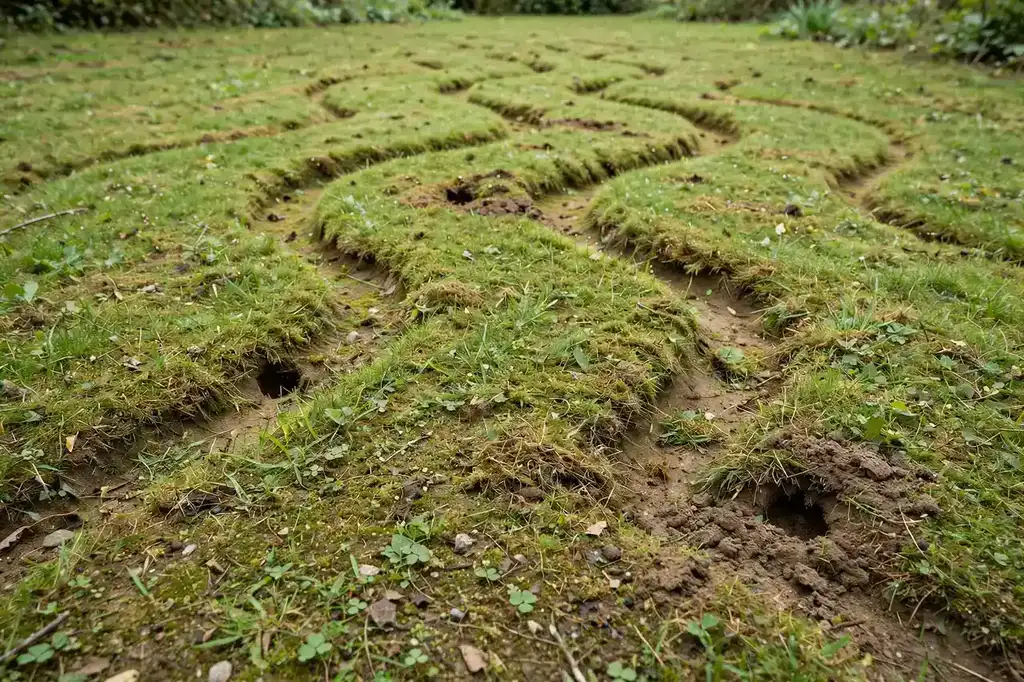
Start with the correction, because half the calls we get about voles begin with it: voles are not mice. A meadow vole is a stocky little rodent with a short tail and small ears, and it lives its whole life outdoors, in the grass. Where deer mice are Provo's attic problem, meadow voles are Provo's lawn problem — and in Utah County, with our orchards, gardens, big landscaped yards, and open ground along the bench and the river, they are a serious one.
Voles spend their days running a network of surface trails through grass, clipping vegetation as they go, and sheltering under snow, mulch, and ground cover all winter — which is when they do their worst damage, gnawing bark off the base of young trees and shrubs under cover of snow. Most homeowners meet the problem in spring: the snow melts, and the yard looks like a road map, with a dead ornamental tree in the middle of it. Utah County's backyard fruit trees — the apples, peaches, and cherries this valley is known for — are prime girdling targets.
Vole control is not house rodent control moved outdoors. It's habitat work, population reduction along the runways, and physical protection of the plants you can't afford to lose. Done in the right season and the right order, it works.
Start With the Lawn Itself
Voles in Your Lawn
Runway networks after snow melt, bare patches, spongy trails — what lawn vole damage looks like and how it's handled season by season.
Lawn voles →Rodent Inspection
Not sure if it's voles, mice, or both? An inspection identifies what's actually in your yard and house before you pay for the wrong fix.
Inspections →Mice Control
Voles outside but scratching inside? The indoor problem is deer mice or house mice — here's the service that handles them.
Mice control →Signs of Vole Damage
Surface runways. Neat, winding trails about an inch or two wide clipped through the grass, connecting burrow openings — the single most recognizable vole sign, usually revealed fully at snow melt.
Girdled trees and shrubs. Bark gnawed away in a band around the trunk base, often right at or below the soil and snow line. Partial girdling weakens; complete girdling kills.
Bulbs and roots eaten. Tulip and crocus bulbs vanish; vegetable roots and garden plants get clipped at ground level along runway lines.
Spongy, uneven turf. Shallow burrowing under the surface leaves lawns feeling soft and looking patchy, especially along edges, fences, and garden borders where cover is thickest.
Our Control Approach
Habitat first. Voles need cover the way fish need water. Mowing edges shorter, pulling deep mulch back from trunks and foundations, clearing dense ground cover along fences, and keeping grass trimmed around garden beds removes the shelter their whole system depends on. Habitat work is unglamorous and it's the foundation everything else stands on.
Trapping along runways. Population reduction is done with traps set directly in active runways — voles are creatures of fixed routes, which makes them reliably trappable once the network is mapped. Checked and adjusted over a series of visits during the active season.
Physical protection. Mesh trunk guards on young and fruit trees before winter, hardware cloth cylinders around high-value plantings, and buried mesh around bulb beds and garden areas. One guarded tree survives the winter; one unguarded peach tree in a heavy vole year often doesn't.
No broadcast poison. Voles are lunch for Utah County's owls, hawks, foxes, and outdoor cats. Poisoning the prey poisons the predators. Trapping and habitat do the job without it.
Vole Control FAQs
What's the difference between a vole and a mouse?
Voles are stockier, with shorter tails, smaller eyes and ears, and they live almost entirely outdoors. Mice invade houses; voles invade lawns. Voles carve surface runways through grass, eat bulbs and bark, and girdle trees and shrubs — a completely different problem needing a different approach.
When is vole damage worst in Utah County?
It shows up in spring, when snow melt reveals the runway networks and bark damage voles did all winter under snow cover. Fall is the second pressure period as voles prepare for winter. Populations also cycle — some years are simply heavy vole years across Utah County.
Can voles damage trees?
Yes — girdling is the serious damage. Voles gnaw bark in a band around the base of young trees, shrubs, and fruit trees. A fully girdled tree is cut off from its roots and usually dies. Trunk guards are cheap prevention compared to replacing a tree.
Do voles come into houses?
Rarely. Voles are outdoor rodents tied to ground cover and grass. If you're finding rodents indoors, you're almost certainly dealing with deer mice or house mice — different problem, different service. We'll tell you honestly which one you have.
What actually controls voles?
A combination: reducing the habitat they need (tall grass, deep mulch, dense ground cover against the house), trapping along active runways to cut the population, and physical protection — mesh guards on tree trunks, hardware cloth around garden beds and bulbs.
Should I use poison for voles?
We don't recommend broadcast poison in yards. Voles are prey for owls, hawks, foxes, and neighborhood pets, and poisoned voles carry that poison up the food chain. Trapping and habitat work reduce vole numbers without creating a hazard for the animals that hunt them.
Save the Lawn — and the Trees
Habitat work, runway trapping, and trunk protection, timed to the Utah County seasons. Mon–Sat, 7am–7pm.
Call (385) 406-1774