 Provo
Rodent Control in American Fork, UT
American Fork sits where the canyon meets the suburbs — deer mice on one side, fast-growing neighborhoods on the other. We keep both from moving in with you. Provo Rodent Pros is the rodent-only team for American Fork, based in Provo at (385) 406-1774.
Call (385) 406-1774Free EstimateFree estimate on the call — no obligation.
Your Local American Fork Rodent Exterminator
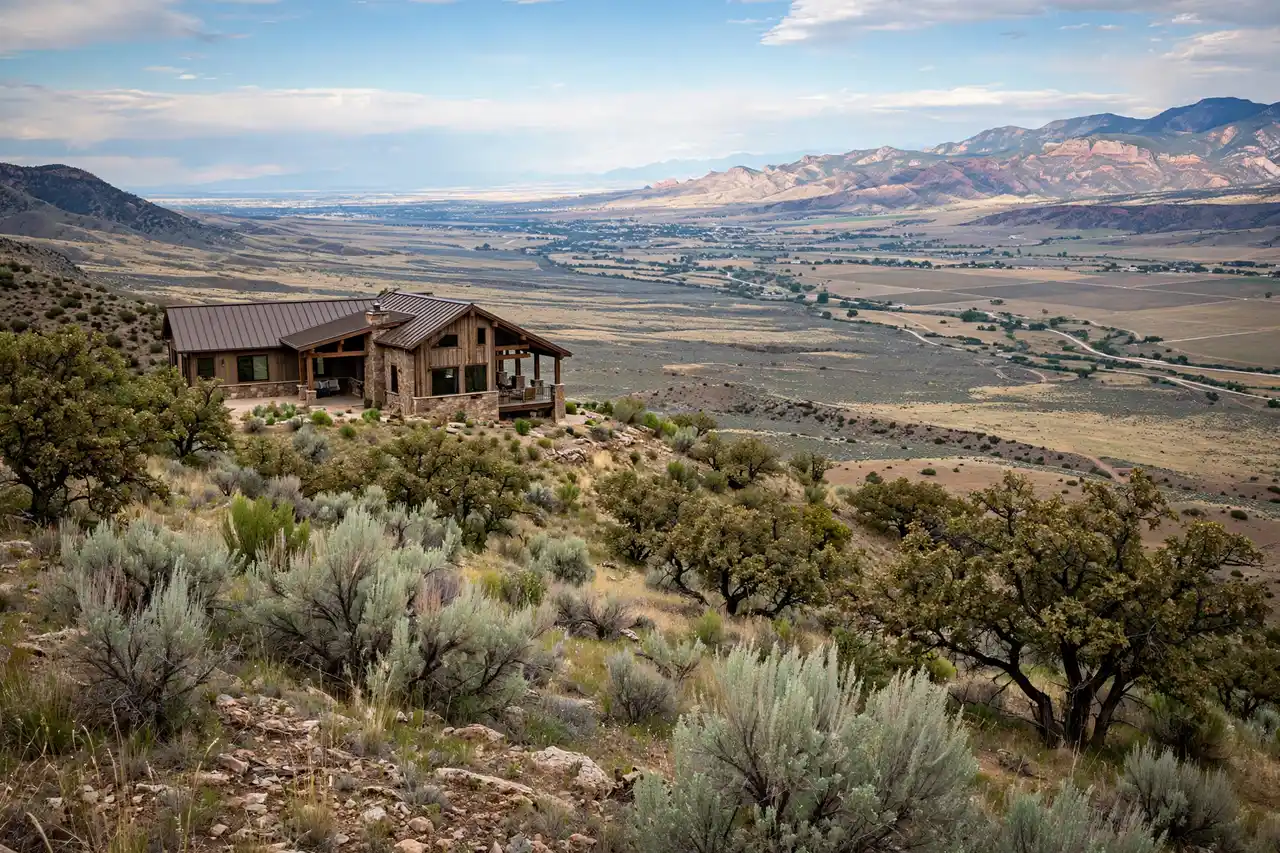
This page is our rodent control American Fork guide — the verified facts about the city, why rodents get in, and how a visit works. American Fork is north Utah County's crossroads — an established downtown with homes that have stood for generations, a commuter population that heads to jobs in both directions, and big new growth pushing out from the center. What shapes its rodent problems more than anything is geography: the city sits right at the mouth of American Fork Canyon, with the foothills rising directly behind the east-side neighborhoods.
That canyon mouth is deer mouse country. Deer mice — Utah's number one indoor rodent and the species linked to hantavirus — live in the brush and rocky ground of the foothills year-round. When fall nights turn cold on the bench, the first warm, food-rich structures those mice reach are east American Fork homes. The scratching in the attic that starts in October in a bench neighborhood is very often a deer mouse that lived fifty yards away all summer. Meanwhile, the older homes near downtown have the classic house mouse story: decades-old foundations, mature landscaping against the walls, and vents and seals that have quietly failed over the years.
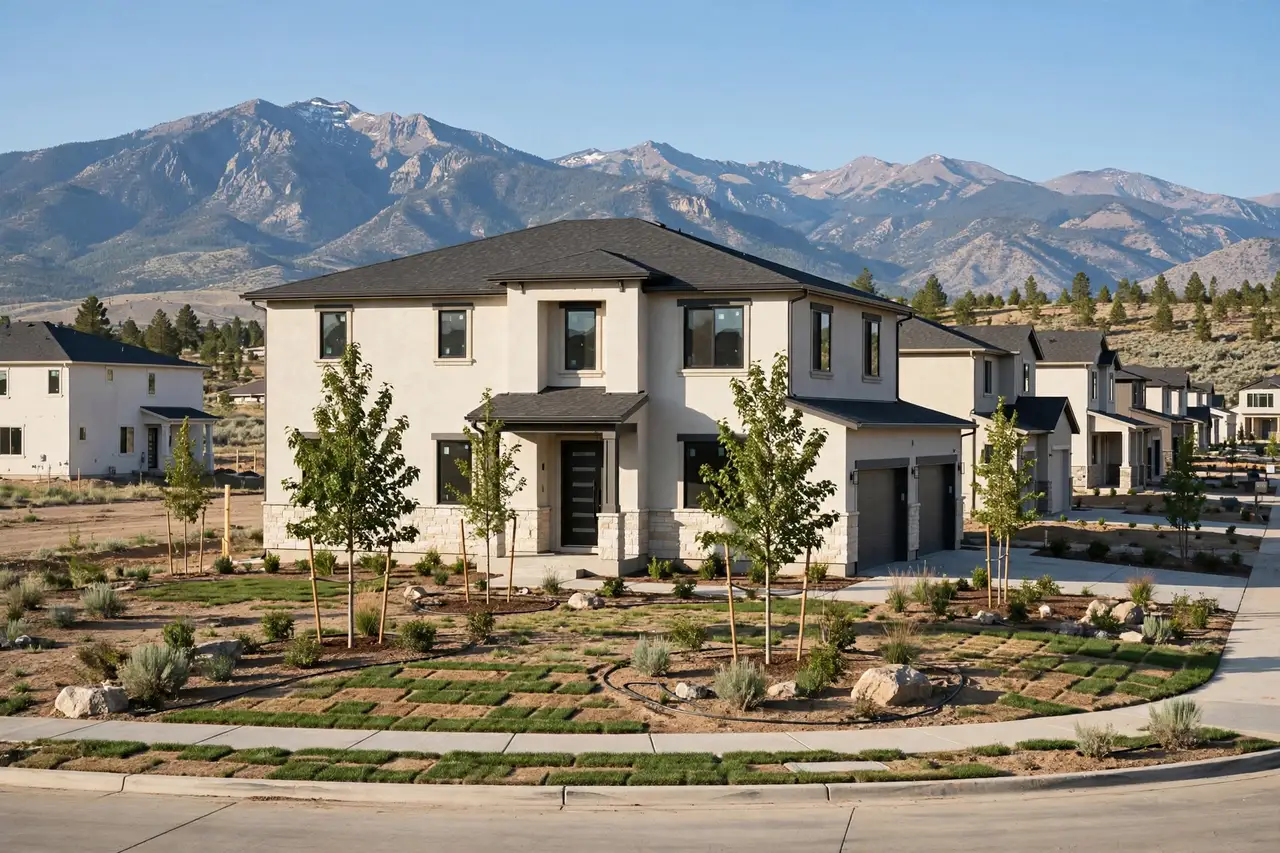
The new growth west and north repeats the pattern we see across Utah County — subdivisions on former open ground inherit the mice and voles that were already there, and quick construction leaves entry gaps behind. Three different settings, one consistent fix: identify which animal you have, remove it, clean up safely, and seal the structure against the next one.
American Fork at a Glance: the Verified Facts
American Fork sits in north-central Utah County at the foot of Mount Timpanogos, north of Utah Lake, about 14 miles driving from Provo — roughly 18 minutes, 12 miles straight-line — and about 32 miles southeast of Salt Lake City. The U.S. Census Bureau's July 1, 2024 estimate puts the population at 41,298, up about 23.7% from the 2020 base — the 2020 census counted 33,378 — across about 11.4 square miles, at an elevation of 1,404 meters. The American Community Survey 5-year figure differs at 37,109, a different measure rather than a competing count.
The geography is the story. American Fork Canyon runs right to the city's edge, holding Timpanogos Cave National Monument — where the trail climbs about 1,092 feet over 1.5 miles and tours are ranger-led only — and Tibble Fork Reservoir. The Alpine Loop is a 20-mile scenic highway through Uinta National Forest connecting American Fork Canyon to Provo Canyon via Sundance. To the south, American Fork Beach and Boat Harbor at 6398 South 100 West on Utah Lake reopened in June 2025 after renovation. The city offices sit at 51 East Main Street in the downtown and Main Street area. On the north and east side stand American Fork High School at 510 North 600 East, the Mount Timpanogos Utah Temple at 742 North 900 East, and Intermountain American Fork Hospital at 170 North 1100 East. On the west side near Interstate 15 is the FrontRunner station at 782 West 200 South. The Alpine School District serves the city now, and the new Aspen Peaks School District takes over from July 2027, the same Proposition 11 change as in Highland.
Neighborhood names for American Fork appear in secondary sources — East Bench, Central, North and Silicon Slopes, Entry West, Marsh Landing, Sam White's Lane, North Field, Meadows, and Valley View — but they are not verified as official boundaries, so they are used here only as general areas, not as a map. One source's "Meadows / Cedar Hills" conflates neighboring cities and is not used at all. What is certain is the landmark pattern: canyon and foothills to the east, downtown in the center, growth to the west and north, and the lake to the south — and each side has its own rodent pattern.
Why Rodents Get Into American Fork Homes
Utah State University Extension states it plainly: with the onset of cold weather, mice and rats enter buildings seeking food and shelter. A mouse needs an opening larger than a quarter inch — about the width of a pencil — so the sealing rule USU gives is to close every hole or opening larger than 1/4 inch with concrete mortar, sheet metal, or heavy-gauge hardware cloth, and to check garages, barns, and doors with gaps over 1/4 inch. Mice are most active at night and can roam undetected; USU notes that a daytime sighting may indicate a significant problem. They prefer foods high in fat and sugar — chocolate, bacon, butter, nuts — and they regularly urinate and defecate where they travel, so droppings plus a musky urine smell from cupboards or drawers indicate high numbers. A leftover cookie behind a couch cushion can feed a mouse for more than a week, which is why crumbs and open food matter as much as holes in the wall.
In American Fork that entry rule plays out in three settings at once. East-side bench homes sit directly against deer-mouse habitat at the canyon mouth, and the mice arrive earlier in the fall than they do farther west. Downtown and Main Street homes have the older-home pattern: decades-old foundations, mature landscaping against the walls, and seals that have quietly failed. West and north growth sits on former open ground, where construction displaced the mice and voles that already lived there and quick building left entry gaps behind. The fix is the same in all three settings, but the inspection looks in different places first — which is why a generic visit misses what a local one finds.
Deer Mice, House Mice, and Rats in American Fork
Three animals account for nearly every call. The deer mouse (Peromyscus maniculatus) is brown-to-gray with a white belly, a furry tail, and ears smaller than a house mouse, about 6 inches long including the tail. It prefers rural areas — fields, pastures, and vegetative areas around buildings — and moves indoors when cold. It is the known carrier of hantavirus pulmonary syndrome. The house mouse (Mus musculus) is smaller, under 8 inches in total, with a slender body, a pointed nose, small protruding eyes, and a hairless tail with obvious scale rings; it lives close to people year-round. The Norway rat (Rattus norvegicus) is much larger, 12–18 inches in total. House mice and Norway rats are not native to North America — they were transported from Europe in colonial settlement. Knowing which one you have matters, because deer mice, house mice, and rats behave differently and are handled differently.
The American Fork split is the canyon split. Deer mice dominate the bench and canyon-mouth homes and are the species whose droppings carry the hantavirus risk. House mice run the established downtown interiors and the commercial areas. Norway rats work the commercial corridors, ditches, and water corridors. Voles work the lawns and landscaping, especially where new plantings border open ground. Each leaves different droppings, gnaw patterns, and sounds — and each gets a different plan, starting with identification.
The Fall Season in American Fork: When Homes Are Most at Risk
No city-specific NOAA station normals were found for this city, so the nearest station is used and labelled as such: the Provo BYU station, NOAA 1991–2020 normals. January averages a high of 41.0°F and a low of 23.5°F; February 47.5°F and 27.2°F; July 95.0°F and 62.1°F. Annual precipitation is about 17.2 inches — the wettest month is May at about 2.0 inches, the driest July at about 0.5 inches. Snowfall is about 44.9 inches per the NOAA normals summary, while the seasonal average quoted in the Wikipedia Provo climate text is 57.2 inches — both figures are recorded here and not reconciled. There are 111 nights per year at or below freezing and about 4 mornings at or below 0°F in an average winter. The last freeze is expected around April 29, the first morning below freezing around October 14, and the first frost falls October 11–20. That frost window is the seasonal anchor for fall rodent entry — it is frost data, not rodent-activity data — and it is why the scratching usually starts in October.
For American Fork the canyon edge sharpens that window: bench homes at the canyon mouth typically see deer mice earlier in the fall than homes farther west, and the pressure repeats every year. A home sealed before the first frost skips the cycle. A home sealed the week the scratching starts still stops the problem from becoming a winter-long infestation — but every week of waiting is a week of breeding and droppings in the insulation.
Services Available in American Fork
Mice Control
Deer mice from the foothills and house mice in established neighborhoods — identified correctly, removed, and sealed out.
Mice control →Rat Control
Norway rats around commercial areas, ditches, and water corridors trapped and proofed against with serious sealing.
Rat control →Rodent Removal
Live trapping and dead animal removal from attics, walls, and crawl spaces, with cleanup of what they leave behind.
Rodent removal →Rodent Exclusion
Roofline, vents, foundation, and garage sealed — essential for bench homes that face deer mouse pressure every single fall.
Rodent exclusion →Attic Rodent Control
Attic inspections, safe droppings cleanup, and insulation checks for homes where mice winter overhead.
Attic services →Rodent Inspection
A full entry-point inspection — rooflines and eaves included, where foothill homes most often fail.
Book an inspection →How an American Fork Visit Works
Every job follows the same four steps, in order. Inspection first: we identify the species and map the activity — where droppings are fresh, where rub marks show travel routes, where nests are forming — and outside we walk the foundation, garage, vents, and roofline to find every entry point. Removal: traps are set along the actual travel routes, close to walls, because mice have poor eyesight and excellent touch and smell; USU Extension recommends at least 6 traps, with small amounts of fresh bait — peanut butter or chocolate work well, and cheese is not recommended. Exclusion: every gap found is sealed with materials mice cannot chew through — metal flashing, copper mesh, hardware cloth, and proper sealants. Cleanup and prevention: contaminated areas are cleaned with safe wet methods, never dry sweeping, and we walk through the attractant fixes — sealed food storage, pet food off the floor, clutter away from the foundation. USU advises against using rodenticides or poisons inside homes, because dead rodents decay in the home and cause odour, and notes there is no scientific evidence for electromagnetic or ultrasonic repellent devices.
On a bench home at the canyon mouth, the inspection spends extra time on the roofline and eaves, where foothill homes most often fail. On a downtown home it spends extra time on the foundation, the vents, and the garage. On a new-build home it checks the utility penetrations and garage gaps that fast construction leaves behind. Either way you get a plain-language summary of what was found before any work starts.
What Rodent Work Costs in American Fork: Factors, Not Flat Prices
There is no flat price for rodent work, because no two homes present the same job. What shapes the cost is the size of the home and the length of its roofline, how many entry points the inspection finds, whether the attic or crawl space needs cleanup, how much contaminated material must be handled, and whether follow-up visits are needed to confirm the animals are gone. A small home with two gaps is a different job from a large home with a dozen. That is why the first step is always an inspection and a plain-language summary of what was found — so the plan and its cost are tied to your house, not to a generic package. For the factors that drive cost in Utah County, see our rodent control cost guide for Provo, which explains the factors rather than quoting a price for a home we have not seen.
Hantavirus and Droppings Safety in American Fork
The health risk behind the droppings is hantavirus. The CDC reports 890 laboratory-confirmed hantavirus disease cases in the United States from the start of surveillance in 1993 through the end of 2023, with 859 hantavirus pulmonary syndrome cases as of December 2020, about 35% of those fatal, and 94% of cases west of the Mississippi River. Utah's own health department, in guidance published April 28, 2025, states that hantavirus is fatal in about 60% of cases reported. Those two figures differ and are recorded here with their sources, not reconciled. Utah has recorded cases since surveillance began — 14 Utah cases through December 7, 2000 — and as recently as August 2016 a Utah County woman's death was the second hantavirus death in Utah that year and the tenth Utah case since 2006. The virus spreads through fresh urine, droppings, and saliva, mainly by breathing contaminated air and dust. Early symptoms, 1 to 8 weeks after exposure, include fatigue, fever, muscle aches, headache, dizziness, chills, and nausea; 4 to 10 days after the first phase, coughing, shortness of breath, and chest tightness follow as the lungs fill with fluid. Anyone with early symptoms and rodent exposure should contact a healthcare provider immediately.
Safe cleanup follows Utah Department of Health and Human Services guidance: air out closed-up buildings before entering, trap mice until all are gone, wear rubber or plastic gloves, spray urine, droppings, and nests with a bleach solution or EPA-registered disinfectant until very wet, soak for 5 minutes, wipe with paper towels into a covered garbage can, mop or sponge with disinfectant, and wash hands with soap and warm water. Never sweep droppings into the air and never vacuum them with a household vacuum. On the bleach mix, sources differ: CDC-derived summaries give 1 part bleach to 9 parts water, while other summaries give 1 part to 10. Both ratios are recorded here with that attribution, not reconciled. Also put hay, wood, and compost piles far from the home, remove trash and junk piles, and do not leave pet food or water where mice can reach it.
That is why our rodent dropping cleanup work uses the wet method and never dry-sweeps. If the droppings are in an attic, a garage, or a shed — the places deer mice use most near the canyon — call before you clean. The Utah deer-mouse picture is covered in detail on our deer mice and hantavirus safety page.
Why American Fork Calls Us
- Foothill experience. Canyon-mouth homes need roofline-level exclusion, not just traps in the garage. We inspect where deer mice actually enter.
- Correct identification. Deer mice and house mice behave differently and carry different health considerations. The plan starts with knowing which one you have.
- Rodents only. Our whole practice is mice, rats, and voles — not a general pest route with a rodent add-on.
- Safe cleanup practices. Deer mouse droppings are handled with ventilation, wet methods, and protective gear — the way health guidance says to do it.
- Built for commuters. Call during the day, tell us what you are hearing at night, and we will get an inspection set without the runaround.
American Fork Rodent Questions
Why do homes near American Fork Canyon get so many mice?
Deer mice live throughout the foothills and canyon brush. When nights turn cold, homes at the canyon mouth are the first warm structures those mice reach. Bench homes typically see deer mice earlier in the fall than homes farther west, and the pressure repeats every year — which is why sealing matters more than trapping alone.
How do I know if it is deer mice or house mice?
Location is the first clue: deer mice dominate near the foothills and open ground, while house mice are more common in long-established neighborhoods and commercial areas. Droppings look similar to most people, so identification during an inspection — along with where activity shows up — is what shapes the plan.
My home is new. Can rodents really be a problem already?
Yes. American Fork's newer developments went up on open land that already had mice and voles living in it, and fast-built homes often have unsealed utility penetrations and garage gaps. We regularly find rodent entry points on homes in their first year.
Do you handle voles damaging landscaping?
Yes. Voles chew runways through lawns and strip bark from young trees and shrubs, and they are especially active where new landscaping borders open ground. Vole work looks at habitat — grass height, ground cover, and mulch against the foundation — as much as removal.
What landmarks tell me which rodent pattern my home fits?
The canyon mouth and the foothills behind the east side mean deer mice; downtown and Main Street mean older-home house mice; the west side near Interstate 15 and the FrontRunner station, and the south side toward Utah Lake, mean newer-build pressure and voles in landscaping. The Mount Timpanogos Utah Temple, American Fork High School, and Intermountain American Fork Hospital mark the north and east side, where the bench rises toward the canyon.
Is American Fork Canyon itself a rodent risk for my home?
The canyon is the habitat, not the problem. Deer mice live in the foothills and canyon brush year-round, and the Alpine Loop and Timpanogos Cave country above town is their ground. The risk to a home is the edge where that habitat meets the neighborhood — which is why bench homes at the canyon mouth need roofline-level exclusion, not just traps in the garage.
Nearby Areas
We also serve Provo, Lehi, Pleasant Grove, and Orem — see all areas we serve. If you are seeing the signs — droppings, scratching at night, gnawed packaging — our Utah signs of rodent infestation guide explains what each sign means and what to do next.
American Fork's Rodent Problem, Solved.
Bench home, downtown classic, or new build — call Provo Rodent Pros, 24/7.
Call (385) 406-1774