 Provo
Signs of Rodent Infestation in Utah
Droppings in the pantry, scratching in the wall at 2 a.m., a gnawed cereal box — Utah homes give the same warnings every fall, and most of them are easy to miss until the mice have settled in. This Utah-wide guide, sourced to Utah State University Extension and Utah health guidance, explains each sign, what it means, and what to do next. Provo Rodent Pros, (385) 406-1774.
Call (385) 406-1774Free EstimateFree estimate on the call — no obligation.
Signs of Rodent Infestation in Utah: the Full Guide
This guide covers the signs of rodent infestation Utah homeowners report most, and what each one means. Rodents rarely announce themselves. They are most active at night, they travel along walls and baseboards where nobody looks, and they can live in a house for weeks before anyone sees one. The signs below are the ones Utah State University Extension and the CDC-derived guidance agree on — droppings, urine smell, night sounds, gnawing, nests, and sightings — plus the Utah context that makes them matter: the fall entry season, the deer mouse, and the hantavirus risk that changes how droppings must be handled. One honest limit first: no Utah-specific study quantifies which sign appears first or most often, and no Utah seasonal infestation curve exists from an authoritative source, so this guide does not rank the signs or invent a month-by-month curve. It tells you what each sign means and what to do about it.
If the signs are in a Provo home specifically, our Provo-scoped guide — signs of mice in your Provo home — covers the same ground for Provo neighborhoods, and the two pages link to each other. This page is the Utah-wide version: the same signs, the same sources, for any home in the state.
1. Droppings — the Sign You Will Find First
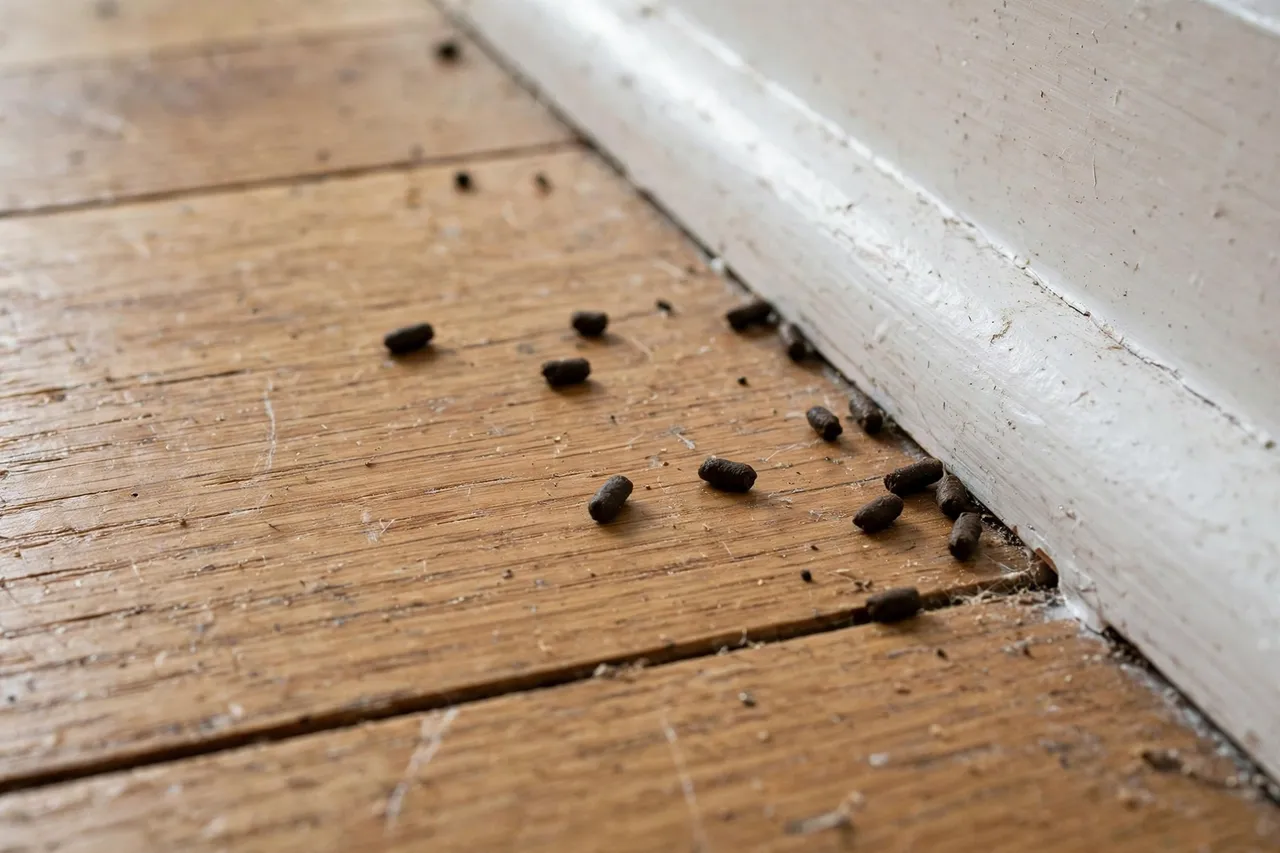
Droppings are the most common first sign, and the most useful, because they tell you the species and the freshness of the activity. Mouse droppings are about the size of a grain of rice; rat droppings are larger and capsule-shaped. Fresh droppings are dark and soft; old droppings are grey and dry. A mix of both usually means an active infestation rather than an old one — fresh droppings alongside old ones say the animals are still there. Look along walls and baseboards, in the pantry, under sinks, in cupboards and drawers, in the attic, and in the garage. Mice regularly urinate and defecate where they travel, so droppings plus a musky urine smell from cupboards or drawers indicate high numbers.
The safety rule matters more than the identification. Deer mice are the known carrier of hantavirus pulmonary syndrome, and the risk comes from breathing dust stirred up from droppings and nesting material. Never dry-sweep droppings and never vacuum them with a household vacuum. The safe method, from Utah health guidance, is to wear rubber or plastic gloves, spray the droppings with a bleach solution or EPA-registered disinfectant until very wet, soak for 5 minutes, wipe up with paper towels into a covered garbage can, mop or sponge with disinfectant, and wash hands with soap and warm water. On the bleach mix, sources differ: CDC-derived summaries give 1 part bleach to 9 parts water, while other summaries give 1 part to 10 — both ratios are recorded here with that attribution, not reconciled. For large amounts, attic contamination, or anything involving deer mice, the cleanup should be done with proper protective equipment — which is exactly how our rodent dropping cleanup work handles it. The full Utah hantavirus picture is on our deer mice and hantavirus safety page.
2. Scratching and Rustling Sounds at Night
Mice are most active at night, and light sleepers hear them first: scratching, rustling, or scurrying sounds in walls, ceilings, or the attic, usually after dark. The dusk-to-midnight window is the classic one. Sounds in the attic point to mice nesting in insulation; sounds in a wall void point to travel routes between the kitchen and the nest; sounds that move from room to room point to an established run. A single night of scratching can be a single animal — scratching on multiple nights is a population. If the sounds are in a bedroom wall, the mice are close to where you sleep, and that is the point to call rather than wait: every week of waiting is a week of breeding, gnawing, and droppings in the insulation.
3. Gnaw Marks — on Food, Wood, Wiring, and Doors
Mice and rats gnaw constantly, and the marks are a reliable sign even when the animals are never seen. Chewed food packaging in the pantry, gnawed corners of boxes, nibbled wood around doors and baseboards, and — most seriously — gnawed wiring and insulation are all rodent signs. Gnawed wiring is a fire hazard, not just a nuisance, and it is one of the reasons an infestation should not be left to run. Check the backs of pantry shelves, the corners of stored boxes, the insulation in the attic, and the wiring near the water heater and furnace. Fresh gnaw marks are lighter in color; older ones darken with age, the same way droppings do.
4. Nests and Nesting Material
Rodents nest in hidden, warm, undisturbed places: attics, garages, sheds, crawl spaces, wall voids, and the backs of closets. The nest itself is shredded paper, fabric, insulation, or plant material gathered into a ball or a loose pile, often with droppings nearby. Finding a nest means the animals are not visiting — they have moved in. Attics are the common Utah harborage, and mice reach them through roofline gaps, vents, and the same quarter-inch openings they use everywhere else. If you find a nest, do not disturb it dry: treat it like droppings, with gloves, wet disinfection, and bagging — or call, and let it be handled safely. Our attic rodent control service covers the inspection, removal, and cleanup of an infested attic.
5. Grease and Rub Marks Along Runways
Rodents travel the same routes night after night, and their bodies leave grease and rub marks along baseboards, walls, and entry holes — dark, smudgy lines where the run meets the wall. Mice have poor eyesight and excellent touch and smell, so they hug walls and baseboards as they travel, which is why the marks show up exactly there. Rub marks tell you the route, and the route tells you where to set traps and where to seal: a rub mark that ends at a pipe penetration or a garage door corner is pointing at the entry point. Fresh rub marks are darker and greasier; old ones fade. A rub mark with fresh droppings beneath it is an active runway.
6. A Musky or Musty Urine Odour
A musty, ammonia-like smell in the attic, the garage, or a closed cupboard is a rodent sign in its own right. Mice constantly urinate as they travel, and in an enclosed space the smell builds up — USU notes that a musky urine smell from cupboards or drawers indicates high numbers. The smell is strongest where the animals nest or travel most: the attic, the wall void behind the kitchen, the garage, and the pantry. A smell with no visible droppings still warrants an inspection, because the droppings may be in a wall void or an attic you have not looked in. And a smell that gets stronger over days means the population is growing, not leaving.
7. Daytime Sightings — and What They Mean
Seeing a mouse during the day is the sign people take most seriously, and rightly so. USU notes that mice are most active at night and can roam undetected, and that a daytime sighting may indicate a significant problem — the animals are numerous enough, or hungry enough, that one is out in daylight. A single mouse in October can sometimes be a wanderer that came in through an open garage door. A daytime sighting plus droppings in more than one room, or scratching on multiple nights, means the mice have moved in. Pets staring or sniffing at a wall, or a dog suddenly interested in a particular corner, is the same sign one step earlier — the animal smells or hears what you cannot see yet.
8. The Utah Signs: Deer Mice, the Fall Season, and the Attic
Three Utah facts tie the signs together. First, the species: the deer mouse is Utah's most common indoor rodent, a foothill and field animal that lives outdoors and moves indoors when cold, and the known hantavirus carrier. Its droppings in sheds, cabins, and closed-up buildings carry the hantavirus risk and are never dry-swept. The house mouse is the year-round indoor species, smaller and plain gray-brown. The Norway rat is the larger, ground-level animal, 12 to 18 inches in total. Roof rats are a southern-Utah emphasis in some pest-control material, not a Provo or Utah County claim, and are not presented here as one.
Second, the season: USU states that with the onset of cold weather, mice and rats enter buildings seeking food and shelter, and mice are most likely to invade structures in the fall. The Provo-area frost anchor is the first frost on October 11–20, with the first morning below freezing around October 14 and the last freeze around April 29 — frost data, not rodent-activity data, but the window in which the signs start appearing. One company's internal records put the mouse peak in November, with October through January carrying 45.4% of the mouse year — a single company's records, not an authoritative Utah fact, and not presented here as one.
Third, the attic: the attic is the common Utah harborage, and mice reach it through a gap the width of a pencil — any opening larger than 1/4 inch. Seal those openings with concrete mortar, sheet metal, or heavy-gauge hardware cloth, check garages and doors with gaps over 1/4 inch, store food in rodent-proof containers, and remove crumbs. USU advises against using rodenticides inside homes, because dead rodents decay in the home and cause odour, and notes there is no scientific evidence for electromagnetic or ultrasonic repellent devices. The full prevention sequence is on our rodent proofing and rodent exclusion pages, and the fall calendar is on our Provo rodent season calendar.
What to Do When You Find the Signs
Do not sweep or vacuum the droppings, and keep kids and pets out of the area. Put on gloves and a mask, note where the signs are — which rooms, whether the droppings are fresh, whether you hear sounds at night — and then call for an inspection. The inspection identifies the species, maps the activity, and finds the entry points, and the plan follows from that: trapping along the actual travel routes, sealing every gap larger than a quarter inch with materials mice cannot chew through, and cleanup with safe wet methods. USU recommends at least 6 traps, close to walls, with small amounts of fresh bait — peanut butter or chocolate work well, cheese is not recommended — and a dead rodent should be removed quickly, buried or bagged in an outside garbage container. If the droppings are in an attic or a closed-up building, air the space out before entering and trap mice until all are gone. For the factors that shape cost, see our rodent control cost guide for Provo, which explains the factors rather than quoting a price for a home we have not seen. And if the signs are in a Provo home, the Provo-scoped companion to this guide is signs of mice in your Provo home.
Utah Rodent Signs — Questions
What is the first sign of a rodent infestation in Utah?
There is no Utah study that ranks which sign appears first, so no honest page can name one. The signs most often noticed first are droppings along walls or in a pantry, scratching or rustling sounds at night, and gnawed food packaging. Any one of them is enough to warrant an inspection — you do not need to wait for a second sign.
Are mouse droppings dangerous to clean up myself?
They can be. Deer mice carry hantavirus, and the risk comes from breathing dust stirred up from droppings and nesting material. Never dry-sweep and never use a household vacuum on droppings. Wear gloves, spray with a bleach solution or EPA-registered disinfectant until very wet, soak for 5 minutes, wipe up with paper towels into a covered garbage can, and wash your hands. For large amounts or attic contamination, call a professional.
How can I tell if droppings are fresh or old?
Fresh droppings are dark and soft; old droppings are grey and dry. A mix of both usually means an active infestation rather than an old one. The test is a guide, not a diagnosis — if you are unsure, an inspection reads the signs properly, including where the activity is fresh.
I saw a mouse during the day. Does that mean the problem is bad?
Utah State University Extension notes that mice are most active at night and can roam undetected, and that a daytime sighting may indicate a significant problem. A single mouse in October can sometimes be a wanderer, but a daytime sighting plus droppings in more than one room or scratching on multiple nights means the mice have moved in.
What should I do first when I find signs of rodents?
Do not sweep or vacuum the droppings. Keep kids and pets out of the area, put on gloves and a mask, and note where the signs are — which rooms, whether the droppings are fresh, whether you hear sounds at night. Then call for an inspection, so the species is identified and the entry points are found before any trapping starts.
Found the Signs? Call Before It Grows.
Droppings, scratching, or a nest — one call gets you an inspection, a species ID, and a plan. 24/7.
Call (385) 406-1774