 Provo
Rodent Control in Highland, UT
Highland sits on the bench between Lehi and American Fork — larger homes, newer subdivisions, and open foothill land right above town. Bigger homes mean more roofline, more garage doors, and more ways in. Provo Rodent Pros is the rodent-only team for Highland, based in Provo at (385) 406-1774.
Call (385) 406-1774Free EstimateFree estimate on the call — no obligation.
Your Local Highland Rodent Exterminator
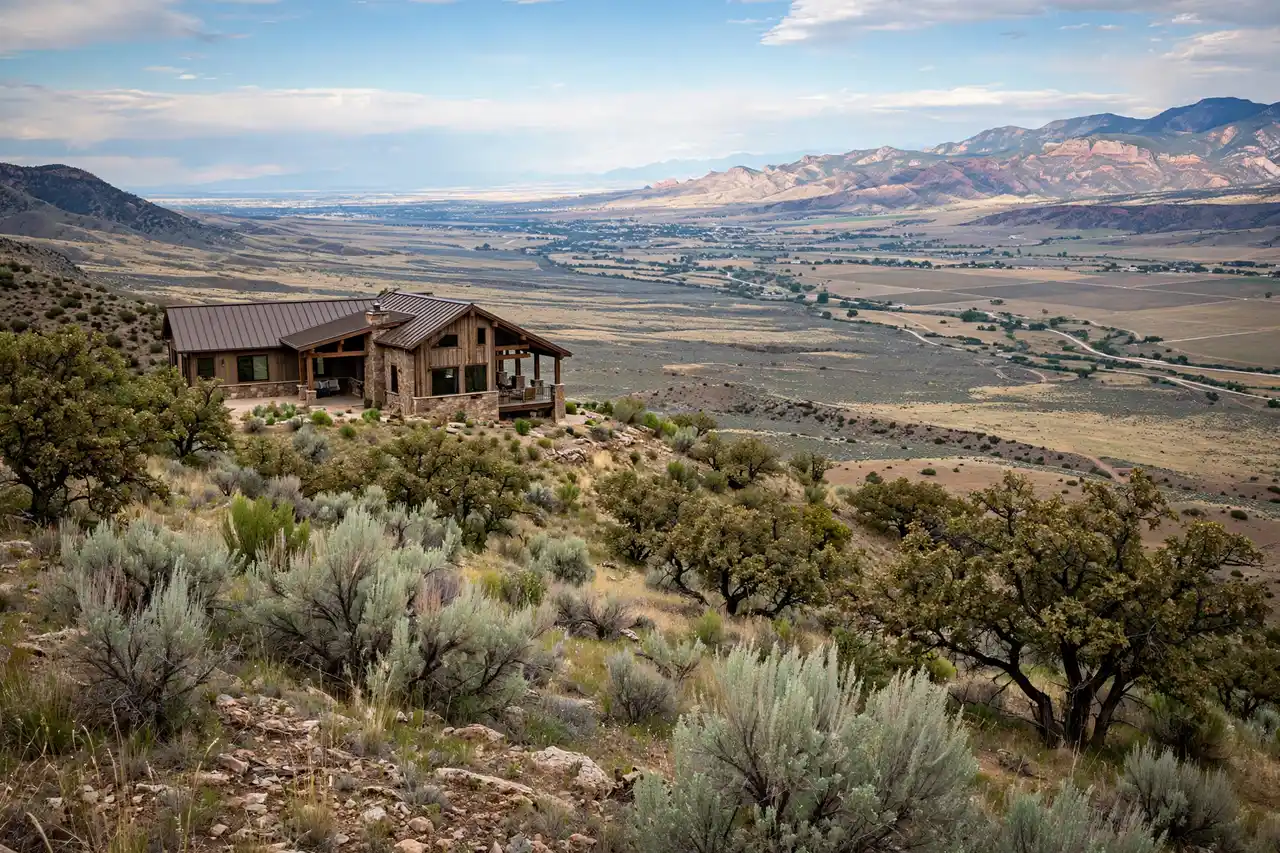
This page is the rodent control Highland guide from Provo Rodent Pros — the verified facts about the town, why rodents get in, and how a visit works. Highland's rodent story starts with its setting: foothill bench above town, open land at the neighborhood's edge, and larger homes with more of everything rodents use — longer rooflines, more vents, more garage doors, more utility penetrations. When fall cold pushes deer mice down from the foothills, a big Highland home offers more entry points than a small one, and finding them all takes a genuinely thorough inspection.
Newer subdivisions near open land add the second half. Construction displaces the field animals, and builder gaps — foam-sealed pipe penetrations, garage corners with daylight showing, siding-to-foundation gaps — let them straight into finished homes. Established areas bring aging seals into the same picture. And landscaped yards draw voles in spring and fall, so many Highland homes fight voles outside and mice inside in the same season.
Our Highland work matches the house: a meticulous inspection of the attic, roofline, garage, foundation, and utility penetrations; sealing done with materials mice cannot chew through; and whole-home proofing options for owners who want the structure closed properly rather than patched visit by visit. A problem that took a season to build rarely disappears overnight — but a sealed home stops restarting every fall.
Highland at a Glance: the Verified Facts
Highland sits at the base of the Wasatch Range in northern Utah County, at the mouth of American Fork Canyon, on a high bench above American Fork formed by ancient Lake Bonneville. It is bordered by American Fork to the south and west, Alpine to the east, and Cedar Hills to the north, with the Lone Peak area and Lone Peak Wilderness nearby and Mount Timpanogos to the east. The U.S. Census Bureau's July 1, 2024 estimate puts Highland's population at 21,146, up 755 (3.7%) in a single year from the 2020 census figure of 19,354. A 2025 estimate of 21,588 from a different source is also noted here as a variant, not merged with the Census figure.
One honest note: no authoritative named-neighborhood list for Highland was found, so this page does not invent subdivision names. The geography that can be verified is the foothills and east bench, the Highland Glen area, and Beacon Hill Park on the west side. What is documented about the housing is the character of the place: intentional low-density zoning, with homes often on half-acre to full-acre-plus lots, many with large-animal rights and no homeowners association in many areas — a secondary-source characterization, stated as such. Highland Glen Park covers more than 40 acres with a lake, and Heritage Park is a second local landmark. The Murdock Canal Trail runs 20.8 paved miles through Alpine, Cedar Hills, Highland, Lehi, American Fork, Lindon, and Pleasant Grove, opened in May 2013 — a trail corridor that is also a wildlife corridor, and a reminder of how close open land sits to Highland backyards.
Highland's schools anchor the community. Lone Peak High School, at 10189 North 4800 West, Highland, UT 84003, was built in 1997 to serve Alpine, Highland, and Cedar Hills, and the Alpine School District runs Highland schools until July 1, 2027, when the new Aspen Peaks School District takes over following Proposition 11 in November 2024. Highland is about 18 to 18.4 miles driving from Provo — roughly 23 to 26 minutes, 15 miles straight-line. One source gave a 46.2-mile figure for the same trip, but it contradicts that source's own second result of 17.9 miles and every other source, so it is treated here as erroneous and not used.
Rat Removal Highland, UT
Rat removal Highland homeowners ask for usually starts with a question most homeowners never think to ask: is it actually a rat? The same crew handles rat control Highland jobs and mice work on the same visit, because the inspection, the sealing, and the cleanup are one job either way. In Highland the answer is usually mice, and usually deer mice — but Norway rats do appear in Utah County, and they need a different plan. Rats are much larger animals, 12 to 18 inches in total, and they leave larger, capsule-shaped droppings, heavier gnaw marks, and louder movement in walls and ceilings than a mouse. They travel along the ground, use burrows near foundations, and work utility lines, drains, and outbuildings. A rat in a Highland garage or shed is often an animal that came in from open ground or from a woodpile, a compost area, or a stored-food source close to the house.
Our rat removal work in Highland follows the same order as everything else we do: identify the species from the droppings, gnaw patterns, and sounds; find how the animal is getting in; trap and remove the animals that are inside; then seal the structure with materials a rat cannot chew through. Poison is not our standard approach indoors — a poisoned rat can die inside a wall and create an odor problem far worse than the original one, and poison carries risks for pets and wildlife. Where a situation genuinely calls for bait, we discuss it honestly before anything is used. The entry points that matter for rats are the same ones that matter for mice, only larger: gaps around pipes and conduits, garage door seals, foundation vents, and roofline openings. A home that is sealed against mice is sealed against rats too — which is why rat removal in Highland is done as a full job, not a single visit with traps.
Mice Removal Highland and Mice Control Highland, UT
Whether you call it mice removal Highland or mice control Highland, the job is the same — and mice removal in Highland is the urgent half of it: getting the animals that are already in the attic, the walls, or the garage out. Traps are set along the actual travel routes, close to walls, because mice have poor eyesight and excellent touch and smell — Utah State University Extension recommends at least 6 traps, with small amounts of fresh bait, and notes that peanut butter or chocolate work well while cheese is not recommended. Trapping lets us confirm mice are actually being caught, so you can see the problem shrinking instead of taking our word for it.
Mice control in Highland is the complete job, and it is what we recommend. Control means removal plus sealing every entry point the inspection finds, plus the yard and storage fixes that keep the next wave from settling in: food in rodent-proof containers, crumbs cleaned up, pet food and water kept where mice cannot reach it, wood and compost piles moved far from the home, and clutter cleared from the foundation. The two species need different attention. Deer mice come down from the foothills in the fall and nest in attics and wall voids; house mice live indoors year-round around kitchens, pantries, and garages. Both squeeze through a gap the width of a pencil, and both keep coming back through the same holes until those holes are closed. That is the difference between mice removal and mice control in Highland: removal empties the house, control keeps it empty.
Why Rodents Get Into Highland Homes
Utah State University Extension states it plainly: with the onset of cold weather, mice and rats enter buildings seeking food and shelter. A mouse needs an opening larger than a quarter inch — about the width of a pencil — so the sealing rule USU gives is to close every hole or opening larger than 1/4 inch with concrete mortar, sheet metal, or heavy-gauge hardware cloth, and to check garages, barns, and doors with gaps over 1/4 inch. Mice are most active at night and can roam undetected; USU notes that a daytime sighting may indicate a significant problem. They prefer foods high in fat and sugar — chocolate, bacon, butter, nuts — and they regularly urinate and defecate where they travel, so droppings plus a musky urine smell from cupboards or drawers indicate high numbers. A leftover cookie behind a couch cushion can feed a mouse for more than a week, which is why crumbs and open food matter as much as holes in the wall.
Highland is the clearest example in Utah County of that guidance in action. The foothill and bench setting puts homes directly against Wasatch Range habitat, where deer mice live outdoors in fields and vegetative areas around buildings and move indoors when cold. Large lots with open space, outbuildings, woodpiles, and vegetation close to the house increase the interface between wild habitat and the home — which is exactly where the general USU guidance on sealing and clutter reduction applies. Add longer rooflines and more penetrations on larger homes, and the fall pressure on a Highland house is higher than on a smaller home farther from the foothills.
Deer Mice, House Mice, and Rats in Highland
Three animals account for nearly every call. The deer mouse (Peromyscus maniculatus) is brown-to-gray with a white belly, a furry tail, and ears smaller than a house mouse, about 6 inches long including the tail. It prefers rural areas — fields, pastures, and vegetative areas around buildings — and moves indoors when cold. It is the known carrier of hantavirus pulmonary syndrome. The house mouse (Mus musculus) is smaller, under 8 inches in total, with a slender body, a pointed nose, small protruding eyes, and a hairless tail with obvious scale rings; it lives close to people year-round. The Norway rat (Rattus norvegicus) is much larger, 12–18 inches in total. House mice and Norway rats are not native to North America — they were transported from Europe in colonial settlement. Knowing which one you have matters, because deer mice, house mice, and rats behave differently and are handled differently.
In Highland the deer mouse is the headline species: a foothill animal that lives outdoors most of the year and moves indoors with the cold, and the known carrier of hantavirus pulmonary syndrome. House mice are the year-round indoor species. Norway rats are the occasional larger visitor. Voles work the landscaped yards. The inspection reads the signs — droppings, gnaw marks, rub marks along baseboards, nesting material in hidden corners — and the species decides the plan.
The Fall Season in Highland: When Homes Are Most at Risk
No city-specific NOAA station normals were found for this city, so the nearest station is used and labelled as such: the Provo BYU station, NOAA 1991–2020 normals. January averages a high of 41.0°F and a low of 23.5°F; February 47.5°F and 27.2°F; July 95.0°F and 62.1°F. Annual precipitation is about 17.2 inches — the wettest month is May at about 2.0 inches, the driest July at about 0.5 inches. Snowfall is about 44.9 inches per the NOAA normals summary, while the seasonal average quoted in the Wikipedia Provo climate text is 57.2 inches — both figures are recorded here and not reconciled. There are 111 nights per year at or below freezing and about 4 mornings at or below 0°F in an average winter. The last freeze is expected around April 29, the first morning below freezing around October 14, and the first frost falls October 11–20. That frost window is the seasonal anchor for fall rodent entry — it is frost data, not rodent-activity data — and it is why the scratching usually starts in October.
For Highland, the foothill edge makes that window sharper: bench homes typically feel deer-mouse pressure earlier in the fall than homes farther west, and the pressure repeats every year. Sealing before the first frost is the best timing; sealing the week you hear scratching is the second-best. A gap left open in October is still open in March, and the mice that moved in during the fall are still active in the house in January.
Services Available in Highland
Mice Control
Foothill deer mice and house mice in large Highland homes — removed, then sealed out.
Mice control →Rodent Exclusion
Long rooflines, vents, garage seals, and penetrations closed with chew-proof materials.
Exclusion services →Attic Rodent Control
Attic inspections and cleanup for homes where mice moved in overhead each fall.
Attic services →Rodent Removal
Live and dead rodent removal from attics, walls, and garages, with cleanup of droppings and nesting.
Rodent removal →Rodent Inspection
A written, photo-clear record of every entry point — essential on a large home.
Book an inspection →Rodent Proofing
Whole-home proofing for large homes, where patchwork fixes keep missing entry points.
Proofing options →How a Highland Visit Works
Every job follows the same four steps, in order. Inspection first: we identify the species and map the activity — where droppings are fresh, where rub marks show travel routes, where nests are forming — and outside we walk the foundation, garage, vents, and roofline to find every entry point. Removal: traps are set along the actual travel routes, close to walls, because mice have poor eyesight and excellent touch and smell; USU Extension recommends at least 6 traps, with small amounts of fresh bait — peanut butter or chocolate work well, and cheese is not recommended. Exclusion: every gap found is sealed with materials mice cannot chew through — metal flashing, copper mesh, hardware cloth, and proper sealants. Cleanup and prevention: contaminated areas are cleaned with safe wet methods, never dry sweeping, and we walk through the attractant fixes — sealed food storage, pet food off the floor, clutter away from the foundation. USU advises against using rodenticides or poisons inside homes, because dead rodents decay in the home and cause odour, and notes there is no scientific evidence for electromagnetic or ultrasonic repellent devices.
On a large Highland home the inspection walks the full roofline and foundation rather than glancing at them, because the gaps that get missed are the ones mice use next. You get a plain-language summary of what was found before any work starts, and for larger homes the whole-home proofing option — a full inspection followed by sealing every entry point found — is often the better choice than patching one gap per visit.
What Rodent Work Costs in Highland: Factors, Not Flat Prices
There is no flat price for rodent work, because no two homes present the same job. What shapes the cost is the size of the home and the length of its roofline, how many entry points the inspection finds, whether the attic or crawl space needs cleanup, how much contaminated material must be handled, and whether follow-up visits are needed to confirm the animals are gone. A small home with two gaps is a different job from a large home with a dozen. That is why the first step is always an inspection and a plain-language summary of what was found — so the plan and its cost are tied to your house, not to a generic package. For the factors that drive cost in Utah County, see our rodent control cost guide for Provo, which explains the factors rather than quoting a price for a home we have not seen.
Hantavirus and Droppings Safety in Highland
The health risk behind the droppings is hantavirus. The CDC reports 890 laboratory-confirmed hantavirus disease cases in the United States from the start of surveillance in 1993 through the end of 2023, with 859 hantavirus pulmonary syndrome cases as of December 2020, about 35% of those fatal, and 94% of cases west of the Mississippi River. Utah's own health department, in guidance published April 28, 2025, states that hantavirus is fatal in about 60% of cases reported. Those two figures differ and are recorded here with their sources, not reconciled. Utah has recorded cases since surveillance began — 14 Utah cases through December 7, 2000 — and as recently as August 2016 a Utah County woman's death was the second hantavirus death in Utah that year and the tenth Utah case since 2006. The virus spreads through fresh urine, droppings, and saliva, mainly by breathing contaminated air and dust. Early symptoms, 1 to 8 weeks after exposure, include fatigue, fever, muscle aches, headache, dizziness, chills, and nausea; 4 to 10 days after the first phase, coughing, shortness of breath, and chest tightness follow as the lungs fill with fluid. Anyone with early symptoms and rodent exposure should contact a healthcare provider immediately.
Safe cleanup follows Utah Department of Health and Human Services guidance: air out closed-up buildings before entering, trap mice until all are gone, wear rubber or plastic gloves, spray urine, droppings, and nests with a bleach solution or EPA-registered disinfectant until very wet, soak for 5 minutes, wipe with paper towels into a covered garbage can, mop or sponge with disinfectant, and wash hands with soap and warm water. Never sweep droppings into the air and never vacuum them with a household vacuum. On the bleach mix, sources differ: CDC-derived summaries give 1 part bleach to 9 parts water, while other summaries give 1 part to 10. Both ratios are recorded here with that attribution, not reconciled. Also put hay, wood, and compost piles far from the home, remove trash and junk piles, and do not leave pet food or water where mice can reach it.
That is why our rodent dropping cleanup work uses the wet method and never dry-sweeps, and why attic contamination is handled with protective equipment. If the droppings are in an attic, a shed, or an outbuilding — the places deer mice use most in Highland — call before you clean. The Utah deer-mouse picture is covered in detail on our deer mice and hantavirus safety page.
Why Highland Calls Us
- Large-home inspections. More roofline means more to check — and we check it all before quoting any work.
- Foothill deer-mouse expertise. The fall bench movement is the core of our Utah County work.
- Proofing, not patchwork. Whole-home proofing closes the structure properly instead of chasing one gap per visit.
- Materials that hold. Foam alone is a snack. Exclusion uses metal mesh, flashing, and proper seals mice cannot chew through.
- Documentation included. Inspection findings written up clearly for owners, landlords, and property managers.
Highland Rodent Questions
Why does a big new home get mice?
Two reasons multiply: more entry points — longer rooflines, more vents, more garage doors — and foothill pressure right above town, plus builder gaps in newer subdivisions. Size does not protect a home; thorough inspection does.
Do you do whole-home proofing?
Yes. For larger homes, proofing — a full inspection followed by sealing every entry point found — beats patching one gap per visit, because the gaps you miss are the ones mice use next.
Are foothill deer mice a fall-only problem?
Fall is the peak, when cold pushes them indoors. Once inside, activity continues through winter — and a gap left open in October is still open in March.
Voles in our yard — same visit?
Yes. Voles are yard rodents, and many Highland homes fight voles outside and mice inside in the same season. Tell us about lawn damage when you call and we will inspect both in one visit.
How long does a large-home inspection take?
Usually under an hour; a larger home can take a bit longer, because the roofline and foundation get walked properly rather than glanced at. You get a plain-language summary of what was found before any work starts.
Do rats get into Highland homes, or is it only mice?
It is mostly mice — deer mice from the foothills and house mice indoors — but rats are not absent from Utah County, and a Highland home with a garage, a woodpile, and open ground nearby can see Norway rats too. Our rat removal in Highland starts the same way every job starts: identify the species from the droppings, gnaw marks, and sounds before choosing the plan.
What is the difference between mice removal and mice control in Highland?
Removal is getting the animals that are already inside out. Mice control in Highland is the full job: removal, plus sealing every entry point the inspection finds, plus the yard and storage fixes that keep the next wave from settling in. Removal alone is a visit; control is the result that lasts past the next cold snap.
Nearby Areas
We also serve Lehi and American Fork — see all areas we serve. If you are seeing the signs — droppings, scratching at night, gnawed packaging — our Utah signs of rodent infestation guide explains what each sign means and what to do next.

Highland's Rodent Problem, Solved.
Big home on the bench with mice? Call Provo Rodent Pros — 24/7.
Call (385) 406-1774