 Provo
Rodent Control & Prevention in Salt Lake City, UT
Salt Lake City is about 45 miles north of Provo — a bigger city, an older housing stock, and the same Utah rodents. Provo Rodent Pros serves Salt Lake City from our Provo base, with prevention first: find the gaps, seal them, and keep the animals out. No Salt Lake City office is claimed here, because there is not one — one crew, one phone number, (385) 406-1774.
Call (385) 406-1774Free EstimateFree estimate on the call — no obligation.
Rodent Control and Prevention in Salt Lake City — From Provo, Honestly
This page covers rodent control & prevention in Salt Lake City from a Provo base, and it states the distance first, because it matters. Salt Lake City is about 45 miles north of Provo — driving about 44.3 to 47 miles depending on the route, about 38.4 miles straight-line, and roughly 45 to 48 minutes on the road. Provo Rodent Pros is based at 150 South Freedom Boulevard in Provo, and we serve Salt Lake City as a service-area city from that base. We do not have a Salt Lake City office, and we do not claim one. What we do have is the same crew, the same rodent-only approach, and the same phone number — and for a city with Salt Lake City's housing stock, that approach is built around prevention.
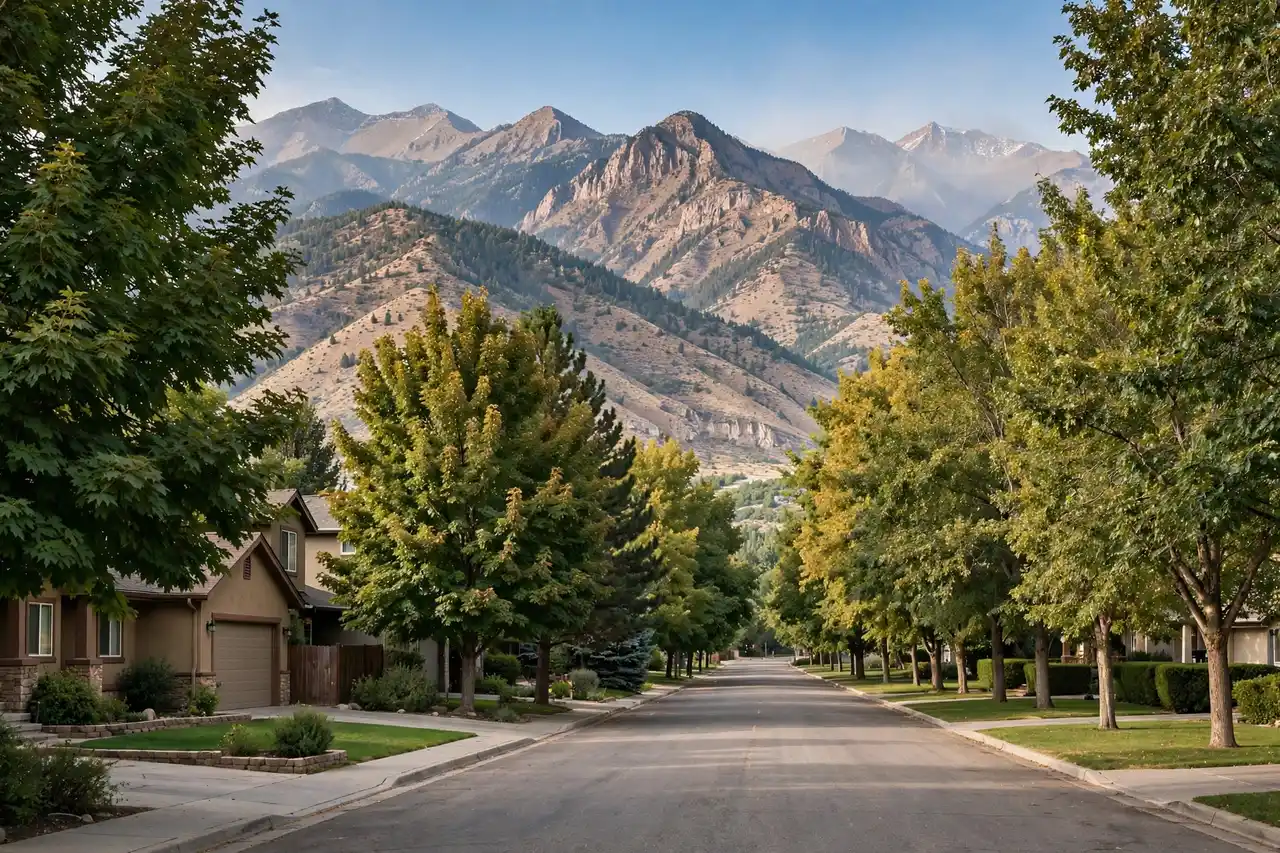
Prevention is the right frame here because Salt Lake City's rodent problem is mostly a building problem. The median year a Salt Lake City home was built is 1965, and 65% of homes were built before 1980. Sixty years of freeze-thaw cycles, settling, and added-on utility lines leave a housing stock full of quarter-inch gaps — and a mouse needs only a quarter inch. Add the foothill neighborhoods on the east side, which sit directly against deer-mouse habitat, and the Jordan River corridor running through the city, and the pattern is set: older homes with more ways in, in a city where the animals are already close by.
Salt Lake City at a Glance: the Verified Facts
Salt Lake City sits in the northeast corner of the Salt Lake Valley, with the Great Salt Lake to the northwest — separated by marshlands and mudflats — the steep Wasatch Range to the east, and the Oquirrh Mountains to the west. The Jordan River flows through the city, draining Utah Lake into the Great Salt Lake. The city's elevation is 4,226 feet, averaging 4,327 feet, with the lowest ground at 4,210 feet near the Jordan River and the Great Salt Lake and the highest point, Grandview Peak, at 9,410 feet. The U.S. Census Bureau's July 1, 2024 estimate puts the population at 217,783, up 5,950 (2.8%) in a single year from the 2020 census figure of 199,723, across about 110.9 square miles. The American Community Survey 5-year figure differs at 208,007, a different measure rather than a competing count.
The neighborhoods are the map of the problem. Downtown, Central City, and Capitol Hill — the city's oldest surviving residential area — hold the oldest homes. The Avenues is the oldest and most important residential district, with more than 100 architect-designed homes in Queen Anne to Prairie styles, Victorian, Craftsman, and Tudor houses from the late 1800s to the early 1900s. City Creek and Memory Grove, South Temple, and Marmalade — largely pre-1930 — complete the historic core. Sugar House holds 1920s-to-1950s bungalows and brick homes, and 9th and 9th, East Central, Liberty Wells, and Yalecrest fill the east side. The University District and Federal Heights climb toward the foothills. Rose Park, Glendale, and Poplar Grove — with 1940s-to-1970s homes — fill the west side, with Ensign Downs and Indian Hills to the north. The local historic districts — the Avenues, Capitol Hill, Central City, City Creek, and South Temple — require design review for exterior changes and demolition, which matters for sealing work: older homes with more gaps are harder to seal, and the work must respect the district rules. No Salt Lake City study was found tying district rules to rodent rates, so that link is not claimed here — it is general building logic, stated as such.
The housing numbers complete the picture. The median home value is 539,500 dollars and the median household income is 75,090 dollars, with 46% of homes owner-occupied and 54% renter-occupied (American Community Survey 2024). In a city where more than half of homes are rented, prevention is often a conversation between tenant and landlord — and a documented inspection gives both sides the same list of entry points.
Why Rodents Are an Issue in Salt Lake City
Utah State University Extension states it plainly: with the onset of cold weather, mice and rats enter buildings seeking food and shelter. A mouse needs an opening larger than a quarter inch — about the width of a pencil — so the sealing rule USU gives is to close every hole or opening larger than 1/4 inch with concrete mortar, sheet metal, or heavy-gauge hardware cloth, and to check garages, barns, and doors with gaps over 1/4 inch. Mice are most active at night and can roam undetected; USU notes that a daytime sighting may indicate a significant problem. They prefer foods high in fat and sugar — chocolate, bacon, butter, nuts — and they regularly urinate and defecate where they travel, so droppings plus a musky urine smell from cupboards or drawers indicate high numbers. A leftover cookie behind a couch cushion can feed a mouse for more than a week, which is why crumbs and open food matter as much as holes in the wall.
In Salt Lake City that entry rule meets the oldest housing stock in this set. A home built in 1965 has had six decades for vent screens to rust, garage door seals to shrink, and foundation gaps to open — and every one of those gaps is a mouse door. The foothill neighborhoods — the Avenues, Federal Heights, and the University District — adjoin deer-mouse habitat directly, and deer mice move indoors when cold. Norway rats follow utility lines, sewer corridors, and riverways such as the Jordan River — a point made on Orkin's Salt Lake City page, consistent with USU rat biology but not independently verified here, so it is attributed to Orkin. Seasonal spikes run from late fall through winter as rodents move inside for warmth, again consistent with USU cold-weather entry guidance. No verified Salt Lake City rodent population count or infestation rate exists, and the claim that the city has one of the largest rodent populations in the country is unverified and is not repeated here.
Salt Lake City Climate: the Cold Season That Drives Rodents Indoors
Salt Lake City has its own NOAA normals, from Salt Lake City International Airport, 1991–2020: January averages a high of 38.6°F and a low of 24.2°F; July 94.0°F and 68.2°F; the annual mean high is 64.9°F and the annual mean low 44.4°F; annual precipitation is 15.52 inches and snowfall 51.9 inches, with January alone bringing 12.7 inches. The cold season is long and the snow is deep — and the rodent season follows it. The heaviest pressure runs from the first cold nights of fall through winter, which is why prevention work done in September and October is worth more than trapping done in January. A home sealed before the cold arrives skips the cycle; a home sealed after the scratching starts still stops the problem from becoming a winter-long infestation.
Deer Mice, House Mice, and Rats in Salt Lake City
Three animals account for nearly every call. The deer mouse (Peromyscus maniculatus) is brown-to-gray with a white belly, a furry tail, and ears smaller than a house mouse, about 6 inches long including the tail. It prefers rural areas — fields, pastures, and vegetative areas around buildings — and moves indoors when cold. It is the known carrier of hantavirus pulmonary syndrome. The house mouse (Mus musculus) is smaller, under 8 inches in total, with a slender body, a pointed nose, small protruding eyes, and a hairless tail with obvious scale rings; it lives close to people year-round. The Norway rat (Rattus norvegicus) is much larger, 12–18 inches in total. House mice and Norway rats are not native to North America — they were transported from Europe in colonial settlement. Knowing which one you have matters, because deer mice, house mice, and rats behave differently and are handled differently.
The Salt Lake City split follows the city map. Deer mice dominate the foothill neighborhoods and any home near sheds, cabins, and garages on the outlying east side — and deer mice are the primary hantavirus reservoir, which is why their droppings are handled differently. House mice run the older interiors year-round, squeezing through dime-sized gaps in homes that have had decades to open up. Norway rats work the utility lines, sewer corridors, and the Jordan River. Identification comes first on every job, because the species decides the trap placement, the sealing priorities, and the cleanup method.
Prevention in Salt Lake City: What Actually Keeps Rodents Out
Prevention is not a product — it is a sequence, and it starts with the building. Seal every hole or opening larger than 1/4 inch with concrete mortar, sheet metal, or heavy-gauge hardware cloth, and check garages, barns, and doors with gaps over 1/4 inch. Fit door sweeps, screen foundation vents and roof vents, and close the gaps where pipes and wires enter the house. Then remove the reasons rodents settle in the yard: store food in rodent-proof containers, remove crumbs, put hay, wood, and compost piles far from the home, remove trash and junk piles, and do not leave pet food or water where mice can reach it. Pick up fallen fruit promptly — it is a reliable food source for mice, rats, and voles.
For a Salt Lake City homeowner the highest-value prevention step is an inspection before the cold arrives. An inspection maps the entry points — the foundation vents, the garage door corners, the roofline joints, the utility penetrations — and produces a written list of what needs sealing, in plain language, before any work starts. In a historic district, that list also lets you check which exterior work needs design review before it begins. And in a rental, the same written list gives the tenant and the landlord one shared set of facts instead of a disagreement about whose problem it is. Our rodent inspection service is that first step, and our rodent proofing service is the whole-home version for owners who want the structure closed properly rather than patched one gap at a time.
Services Available in Salt Lake City
Mice Control
Deer mice from the foothills and house mice in older interiors — removed, then sealed out.
Mice control →Rat Control
Norway rats along utility lines, sewers, and the Jordan River corridor — trapped and excluded.
Rat control →Rodent Removal
Live and dead rodent removal from attics, walls, and garages, with cleanup of droppings and nesting.
Rodent removal →Rodent Exclusion
The prevention half of the job: entry points sealed, vents screened, rooflines and garage doors closed up tight.
Rodent exclusion →Attic Rodent Control
Attic inspections and cleanup for homes where mice moved in overhead during the first cold season.
Attic services →Rodent Inspection
A full entry-point inspection with a written list of findings — the starting point for prevention.
Book an inspection →How a Salt Lake City Visit Works
Every job follows the same four steps, in order. Inspection first: we identify the species and map the activity — where droppings are fresh, where rub marks show travel routes, where nests are forming — and outside we walk the foundation, garage, vents, and roofline to find every entry point. Removal: traps are set along the actual travel routes, close to walls, because mice have poor eyesight and excellent touch and smell; USU Extension recommends at least 6 traps, with small amounts of fresh bait — peanut butter or chocolate work well, and cheese is not recommended. Exclusion: every gap found is sealed with materials mice cannot chew through — metal flashing, copper mesh, hardware cloth, and proper sealants. Cleanup and prevention: contaminated areas are cleaned with safe wet methods, never dry sweeping, and we walk through the attractant fixes — sealed food storage, pet food off the floor, clutter away from the foundation. USU advises against using rodenticides or poisons inside homes, because dead rodents decay in the home and cause odour, and notes there is no scientific evidence for electromagnetic or ultrasonic repellent devices.
For a Salt Lake City home the inspection spends extra time where the decades show: foundation vents and their screens, garage door seals, the roofline where two planes meet, and the utility penetrations added over the years. In a historic-district home it also notes which exterior work would touch a visible feature, so the district rules can be checked first. You get a plain-language summary of what was found before any work starts.
What Rodent Work Costs in Salt Lake City: Factors, Not Flat Prices
There is no flat price for rodent work, because no two homes present the same job. What shapes the cost is the size of the home and the length of its roofline, how many entry points the inspection finds, whether the attic or crawl space needs cleanup, how much contaminated material must be handled, and whether follow-up visits are needed to confirm the animals are gone. A small home with two gaps is a different job from a large home with a dozen. That is why the first step is always an inspection and a plain-language summary of what was found — so the plan and its cost are tied to your house, not to a generic package. For the factors that drive cost in Utah County, see our rodent control cost guide for Provo, which explains the factors rather than quoting a price for a home we have not seen.
Hantavirus and Droppings Safety in Salt Lake City
The health risk behind the droppings is hantavirus. The CDC reports 890 laboratory-confirmed hantavirus disease cases in the United States from the start of surveillance in 1993 through the end of 2023, with 859 hantavirus pulmonary syndrome cases as of December 2020, about 35% of those fatal, and 94% of cases west of the Mississippi River. Utah's own health department, in guidance published April 28, 2025, states that hantavirus is fatal in about 60% of cases reported. Those two figures differ and are recorded here with their sources, not reconciled. Utah has recorded cases since surveillance began — 14 Utah cases through December 7, 2000 — and as recently as August 2016 a Utah County woman's death was the second hantavirus death in Utah that year and the tenth Utah case since 2006. The virus spreads through fresh urine, droppings, and saliva, mainly by breathing contaminated air and dust. Early symptoms, 1 to 8 weeks after exposure, include fatigue, fever, muscle aches, headache, dizziness, chills, and nausea; 4 to 10 days after the first phase, coughing, shortness of breath, and chest tightness follow as the lungs fill with fluid. Anyone with early symptoms and rodent exposure should contact a healthcare provider immediately.
Safe cleanup follows Utah Department of Health and Human Services guidance: air out closed-up buildings before entering, trap mice until all are gone, wear rubber or plastic gloves, spray urine, droppings, and nests with a bleach solution or EPA-registered disinfectant until very wet, soak for 5 minutes, wipe with paper towels into a covered garbage can, mop or sponge with disinfectant, and wash hands with soap and warm water. Never sweep droppings into the air and never vacuum them with a household vacuum. On the bleach mix, sources differ: CDC-derived summaries give 1 part bleach to 9 parts water, while other summaries give 1 part to 10. Both ratios are recorded here with that attribution, not reconciled. Also put hay, wood, and compost piles far from the home, remove trash and junk piles, and do not leave pet food or water where mice can reach it.
That is why our rodent dropping cleanup work uses the wet method and never dry-sweeps. If the droppings are in an attic, a garage, or a shed, or you are unsure which mouse left them, call before you clean. The Utah deer-mouse picture is covered in detail on our deer mice and hantavirus safety page.
Why Salt Lake City Homeowners Call Us
- Honest about the distance. We are a Provo crew serving Salt Lake City — no local office claimed, no call center, one phone number.
- Prevention first. In a city of pre-1980 homes, sealing beats trapping alone, because the gaps are already there.
- Rodents only. No lawn care add-ons, no general spray program — identification, removal, exclusion, cleanup.
- Materials that hold. Foam alone is a snack. Exclusion uses metal mesh, flashing, and proper seals mice cannot chew through.
- Documentation included. Inspection findings written up clearly for owners, landlords, and property managers.
Salt Lake City Rodent Questions
Do you have an office in Salt Lake City?
No. Provo Rodent Pros is based in Provo at 150 South Freedom Boulevard, and Salt Lake City is about 45 miles north — roughly 45 to 48 minutes of driving. We serve Salt Lake City as a service-area city from Provo, with the same crew and the same approach, and we say so plainly rather than implying a local office we do not have.
Why is rodent prevention such a big deal in Salt Lake City?
Two reasons stack up. The housing stock is old — the median year built is 1965 and 65% of homes were built before 1980, which means more gaps, more settled foundations, and more entry points. And the foothill neighborhoods on the east side sit directly against deer-mouse habitat. Prevention — sealing before the animals arrive — is worth more here than in a newer city, because the gaps are already there.
Which Salt Lake City neighborhoods see the most rodent pressure?
The foothill neighborhoods — the Avenues, Federal Heights, and the University District — adjoin deer-mouse habitat, and the older districts — Capitol Hill, Central City, City Creek, and South Temple — have the oldest homes with the most entry points. The Jordan River corridor is the rat route through the city. Sugar House, Rose Park, Glendale, and Poplar Grove each have their own mix of older stock and yard habitat.
Can you work on a home in a Salt Lake City historic district?
Yes, with care. The local historic districts — the Avenues, Capitol Hill, Central City, City Creek, and South Temple — require design review for exterior changes and demolition. Our exclusion work is discreet sealing, screening, and door sweeps, not structural change, but if a repair touches a visible exterior feature we will flag it so you can check the district rules before any work starts.
How do I keep rodents out of a Salt Lake City rental?
Seal the quarter-inch gaps, store food in rodent-proof containers, pick up fallen fruit, keep pet food and water where mice cannot reach it, and clear clutter and woodpiles from the foundation. In a rental, tell the landlord about the entry points in writing — a documented inspection gives both sides the same list of what needs sealing.
Nearby Areas
Our home base is Provo, and we also serve Lehi, Orem, and American Fork — see all areas we serve. If you are seeing the signs — droppings, scratching at night, gnawed packaging — our Utah signs of rodent infestation guide explains what each sign means and what to do next.
Salt Lake City's Rodent Problem, Solved.
Older home with a new scratching sound? Call Provo Rodent Pros — 24/7.
Call (385) 406-1774